
Thursday, March 10, 2016

Wednesday, October 16, 2013
Meu caso com a Sandy.
Surviving Sandy.


A razão da viagem era um evento do Google. Tudo estava indo bem: vôo tranquilo, taxi, skyline de Manhattan, etc. No meio da ponte toca meu telefone. Meu chefe, com uma voz preocupada dizendo: "Ei, Andreas, só estou ligando para avisar que o evento foi cancelado por causa do furacão Sandy. Não voe para Nova Iorque." Minha resposta (pasmo) foi: "Mas eu já estou aqui." Depois de um breve silêncio, ouvi um simples "Oh... Ok... Se cuide então." Eu não leio notícias e tendo a crer que países de primeiro mundo sempre exageram na precaução, mas confesso que fiquei curioso para saber mais sobre o Sandy.
Não demorou muito para entender a magnitude do problema. Gente vendendo lanternas nas esquinas, lojas de conveniência sem água para vender, dezenas de caminhões da ConEdison (a Eletropaulo de lá) estacionados no meio da Union Square, prontos para acudir emergências. Mesmo assim, havia um clima de "não vai ser nada" nas ruas por causa de um alarme falso em 2011. Nesse roteiro de filme, não poderiam faltar estrelas. Primeiro, encontrei a Uma Thurman comprando lanternas numa loja de artigos esportivos. Depois, encontrei a Lucy Liu comprando água numa lojinha de esquina. Só faltava o departamento de efeitos especiais entrar em ação. E não demorou muito.
Estava na casa de uma amiga assistindo um filme quando começou a chover. Minha mãe me ligou do Brasil e eu disse que estava tudo bem (porque estava mesmo). Para provar que ela não tinha com o que se preocupar, falei para a gente se falar via Skype. Mal deu tempo de ligar o Skype e acabou a luz. Expliquei a situação pelo telefone para minha mãe, acendemos umas velas e começamos a comer o que tinha na geladeira. Estávamos em 3, grupo que agora nós carinhosamente chamamos de Team Sandy. Até aqui, nada demais. Chuva forte, vento, mas nada fora do comum.
Mas a chuva foi ficando mais forte, o vento foi ficando mais forte. Lá pelas tantas, eu olhei pela janela e percebi que o terreno de obras do outro lado da rua estava virando uma represa. Resolvi descer na rua e dar uma olhada. Ao sair do prédio, percebi o tamanho do problema. A rua estava quase toda alagada e a 10a Avenida tinha virado um rio, com 50 cm de profundidade e correnteza (!). Voltamos para o apê. Fora a água e os trovões não dava para ter muito a dimensão do que estava acontecendo. Fomos dormir.
No dia seguinte, a chuva já tinha parado, mas não havia eletricidade, transporte público ou comércio. A única alternativa era ficar em casa e não acabar com a bateria do celular. Ao pouco começamos a ter notícias do estrago ao redor: casas derrubadas, túneis e estações de metro alagadas, cidades costeiras varridas do mapa (o evento que eu ia era à beira da praia). À noite, saímos para a primeira volta. Vimos Nova Iorque no escuro. 100% escuro. A pouca luz nas ruas vinha dos carros e das lanternas. Team Sandy voltou para casa.
Na manhã do segundo dia, ficamos sabendo que da metade da cidade para o norte havia luz. Hora de comer, recarregar o telefone e ter uma noção do estrago. Como você já deve ter imaginado, nós não fomos os únicos a ter essa idéia. Em cada tomada de cada farmácia, restaurante ou loja haviam, pelo menos, 3 pessoas lutando para carregar o telefone ou o laptop. Comer também não foi fácil. Até os lugares mais mequetrefes estavam lotados. Todo mundo querendo comida normal e uma desculpa para usar a tomada.
Depois de comer, fomos comprar a fantasia para o Halloween. Afinal, quer desculpa melhor para fazer festa do que ter sobrevivido a um furacão?
Fui.
PS - Este post foi escrito no avião, a caminho de NY. :)
Whenever I'm in New York, I feel like I'm in the set of a major Hollywood blockbuster. I don't think there's a single corner in this city that hasn't been in at least one movie. But last time I was there, I didn't just feel like I was in a movie set: I took part in a real movie plot.
I went there to attend a Google event. Everything was going well: good flight, yellow cab, Manhattan skyline, etc. In the middle of the Brooklyn bridge, my phone rings. It was my boss. He sounded a little worried. "Hey, Andreas, I'm just calling to let you know that the event was cancelled due to hurricane Sandy. Do not fly to New York." To which I replied (shocked): "But I'm already here." After a brief moment of silence, he just said: "Oh... Ok... Be safe, then." I never read the news and I also believe that first world counties tend to exaggerate when it comes to precaution, but I must confess that at that moment I felt like I needed to know more about Sandy.
It didn't take long to understand the magnitude of the problem. There were people selling torches in every corner, shops were running out of bottled water, dozens of ConEdison trucks were already parked in the middle of Union Square, ready for emergencies. But despite all that, people were still kind of joking about it, saying it was going to be another false alarm like in 2011.
As in any movie set, you could also find some stars. First, I met Uma Thurman buying headlamps at a sports shop. Then, I met Lucy Liu buying water at a deli. All we needed now was the special effects team. And it didn't take long for them to show up.
I was at a friend's house when it started to rain. My mom called me from Brazil and I told her everything was fine (it really was). To prove her that she had nothing to worry about, I suggested we spoke via Skype. I barely had time to log in to Skype before the lights went out. I explained the situation to my mom by phone, we lit up some candles e started eating whatever we had on the fridge. We were 3 people (a group we now call Team Sandy). Up to that point, things were under control. Heavy rain, wind, but nothing extraordinary.
The rain kept getting stronger, the wind kept getting stronger. That's when I looked outside and noticed that the construction site across the street was becoming a dam. I decided to go down and take a look. As soon as I walked out of the building, I noticed how bad the situation was. Our street was almost completely flooded and 11th avenue had become a river, half a meter deep and with a strong current pushing south. We went back to the apartment. Despite of all the water and thunder, it was impossible to imagine what kind of damage was being done to the city. So, we went to bed.
Next morning, the rain had stopped, but there was no power, public transport or shops open. The only alternative was to stay home and try not to fully drain the cell phone battery. Little by little we found out how bad the situation was: houses destroyed, tunnels and metro stations completely flooded, coastal cities devastated (the event I was supposed to attend was by the sea). At night, we went out for a first walk. We saw New York in the dark. 100% in the dark. The only light out in the streets came from cars and flashlights. Team Sandy went back home.
On the second morning after the event, we found out that the northern half of Manhattan was OK. Time to go eat, charge phones and check the damage with our own eyes. As you can imagine we were not the only people to have this idea. Around every socket of every pharmacy, restaurant or shop there were at least 3 people fighting for a chance to charge their devices. Eating wasn't easy as well. Even the crappiest places were packed. Every single person wanted to have a normal meal and a shot at an unoccupied socket.
As soon as we finished our meal, we went to a shop to buy our Halloween costumes. After all, is there a better excuse to party than having survived a hurricane?
Cheers.
PS - This post was written on the plane to NY.
Wednesday, August 28, 2013
Bem-vindo a Copenhagen.
Welcome to Copenhagen.


I'm not sure I've ever mentioned this here, but I'm one of those obsessed collectors that can't rest until a collection is complete. In this case, my "collection" of Scandinavian capitals was incomplete and bothering me for years. You can't imagine the relief it was to finally find time to squeeze a trip to Copenhagen last year. As one might expect, Copenhagen shares many of its nordic sisters characteristics: it's very organized, safe, clean, and built to ooze simplicity instead of ostentation. But Copenhagen is a bit of a rebel when compared to its sisters. In Stockholm, I was impressed by the vanity and the good taste of its inhabitants. In Oslo, by all the people going to or coming from sport their sport practice. In Helsinki I was taken aback by how people seem to carry on with their lives indifferent to everyone else around them. That's why I was so surprised to see so much interaction in Copenhagen. There were more people in the streets, more energy, more life. It was like a mix of London and Eastern Europe. Maybe these traits explain why the city has the second oldest amusement park in the world (the oldest one is also in Denmark, not far from there), the Tivoli Park. Or the popularity of Crossfit, which is not a very civilized kind of sport. Or even the sheer number of cafes, bars and restaurants in every street and alley, not to mention the importance of human interaction to get a table or a drink in any of these places. But probably the biggest example of the Danish rebel soul is the Anarchist Communitiy of Freetown Christiania, in the suburbs of Copenhagen. A self-proclaimed autonomous area, which is called home by 850 people. It's a place where people baiscally live how they want to and do almost whatever they want to. Dealing pot was totally OK till 2004, but has become the source of a lot discussion ever since. Even though there's practically no criminality in Denmark, I didn't feel at ease walking around the community. Despite that and the wind (bring a jacket), Copenhagen is a cozy city with lots of attractions (like the famous Little Mermaid), amazing restaurants (including the world's first Paleo restaurant for Crossfit lovers), parks, history, and a charming, colorful pier that deserves all the postcards it features. I hope it doesn't take you as long as it took me to finally go to Copenhagen. Even if you just need to complete your collection of Scandinavian capitals. Cheers.
Tuesday, August 20, 2013
Bem-vindo à Ingushétia. Uma das maiores aventuras da minha vida.
Welcome to Ingushetia. One of the biggest adventures of my life.


When you tell people you are going to visit a place in the Caucasus, people think you went crazy. When you tell them the place you’re going to is right in the heart of the discord between Russia, Chechen, North Ossetia and Georgia, people are pretty sure you went mental. When they find out you are going to Ingushetia, they try to put some sense in your head and beg you not to go. But when you show them your pictures, they all ask what they must do in order to visit such incredible place. Visiting Ingushetia is easy and complicated at the same time, like everything in Russia. Easy because it’s just a short flight away, and all you need is a special visa for the military zones. But it’s complicated because not many companies fly there, and it’s not easy to get the visa. Last september (yes, this post is beyond late), I was invited to take part in an excursion organized by the Akropol group, which belongs to the region’s senator. The (achieved) goal was to show us the region’s potential for tourism. They took care of the visas, the accommodation and the transport. But the adventure was yet to come. Soon after we landed in Magas, the capital of Ingushetia, we headed to Karabulak, where we visited the Argamak haras. I never thought I’d see such horses in such a remote place. They were all award winning, show stopping pure breed horses. From there, we went to Nazran, where the Ingushetian Memorial is located. The memorial is a collection of monuments that celebrate important achievements of the region. An honor for the locals and a great way to learn a lot for ignorants like me. Two monuments stole my attention. The first one was dedicated to the Wild Division. In 1915, 500 men, armed with nothing but swords and rifles, attacked and eliminated the famous Iron Division from Germany. In one and a half hour, they killed 4500 soldiers, hurt another 2500 and arrested the remaining 3500. Sparta, anyone? The second monument impressed me due to its simplicity and how clearly it conveys the meaning of the word “oppression”. A couple of typical towers (I’ll talk about them later) trapped in barbed wire. Beautiful. It was at this unforgettable site that I found out that my visa hadn’t been approved. They told me that for german citizens the process is not that simple due to historical animosity between the two nations. Any reasonable person would have taken the first flight back to Moscow. I decided to accept our guide’s suggestion to cross the military zones illegally. The closer we got to the border, the more tanks and control stations we saw. Our guide’s idea started to sound a little risky when they decided to make me a new visa, as if I was a specialist in ski lifts construction. Then, it got really risky when they told me I should just lie down behind the back seat and hope the guards wouldn’t see me (it was dark already). Lying and with my face covered, I overheard the discussion at the border. After a lot of “Promise it won’t get me in trouble?” and a lot of “Don’t worry.”, they allowed the van to go through. Once we got to the hotel, another funny thing happen: I was the first foreigner the receptionist had ever seen. She kept asking what life was like in Brazil, etc. After that, we retired to our rooms. It was still dark, so we couldn’t the view from the window. When we woke up the next day, Ingushetia started showing a bit of its beauty. The room’s balcony faced an amazing valley, full of waterfalls and typical towers. To make things even better, they gave me a brand new Land Rover to drive during the day. The first stop was at the Lyajgui waterfall. Breathtaking (as every untouched waterfall should me). From there we went to the towers of Erzi, Vovnushki, Alhba-Erdy and Eguikal. These towers are the symbol of Ingushetia. Literally. Each one of these rock towers represent a family. They serve multiple purposes: housing, stocking, protection, and honor. That’s right: honor. There’s only one law to be followed regarding the construction of a tower. If your family requested the right to build one, you have 365 days to build it. If you can’t finish in time, you must leave the tower as is, and the tower will be forever a monument to your shame, to the fact that you didn’t honor your word. Can you imagine what would happen if they passed a law like this in Brazil? Despite the interesting background, the towers are extremely beautiful and do not contrast with the nature around them. Surrounded by mountains similar to the Dolomites, they seem to be belong to the landscape. Some of them were even build directly over the rocks (click here). Next to this beautiful construction, the adventure restarted. As I was climbing the rock to get the picture you just saw, our guide started shouting “Militsia! Militsia!” (Soldiers! Soldiers!). As you probably recall, I didn’t have a visa and was driving a car that didn’t belong to me. So... We ran, jumped in the car and got away as fast as we could, crossing rivers and creating our own roads (here). When we felt that the coast was clear, we made our way to Thaba Erdy, the first christian temple in Russia (here). The simple fact that it’s still standing is a miracle. After all, it was built in the 8th century and resisted time, Communism, and the Orthodox Church. After 2 days in the region, it was time to go back to Moscow. And that meant crossing the military border again. This time the solution was very “Brazilian”: we filled the van with people, handed all 11 passports and visas (mine not included) and told the border guard “Man, we’re in a hurry to get to the airport. Could you just let us through?” When I saw him opening the gates, I realized our people have yet one more thing in common. Ingushetia was an unforgettable adventure. If you have the guts or the means to go there, don’t think twice. The guaranteed rewards by far outweigh the possible risks. I’d like to express my deepest gratitude to our guide and friend Salman Dzangiev for his attention, patience, humor, and for making it all possible. :)
Friday, February 01, 2013
Bem-vindo a Vilnius. A pérola báltica.
Welcome to Vilnius. The Baltic hidden gem.
Vilnius se parece muito com suas irmãs bálticas: Riga e Tallinn. Além da arquitetura meio similar, as três tiveram (ou têm) uma relação complicada com os russos, que fica evidente só de andar pelas cidades. Curiosamente, esta última semelhança é exatamente o que diferencia as cidades. Afinal, a maneira como cada uma delas lida com esta complicada relação é o que nos permite ver as diferentes personalidades destas irmãs.
Riga é a irmã que não esquece. Faz questão de exibir as cicatrizes da invasão Soviética e a insatisfação com a população russa que vive lá.
Tallinn é a irmã mais moderna, que pensa para frente e parece tentar esquecer que um dia esteve sob controle Russo ou que grande parte da sua população vem de lá.
Já Vilnius é a irmã rebelde. Faz questão de deixar claro que seu povo nunca aceitou a presença Russa. Expõe, sem qualquer receio, o que de pior a KGB fez e se orgulha de ter reconstruído tudo aquilo que os Russos derrubaram ou, melhor dizendo, tentaram derrubar. Um bom exemplo disto são as Três Cruzes. Os russos queimaram as cruzes originais, que eram feitas de madeira. Os lituanos foram lá e refizeram as cruzes, desta vez em cimento. Os russos voltaram lá e derrubaram as cruzes (já que não dava mais para queimar). Os lituanos refizeram tudo de novo, só que desta vez em concreto. São três cruzes brancas enormes no topo de uma colina. Elas podem ser vistas de longe e, para mim, servem como um aviso, um monumento ao indomável espírito lituano.
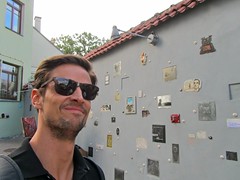
Acredito que este mesmo espírito justifica a fértil e explícita produção artística da cidade. Eu pude sentir a importância da arte como meio de manifestação popular por toda a cidade. Literalmente. Vi muros pintados, “vielas monumento” e até exposições em barragens de rio.
Lá, a ideologia por trás da liberdade artística é tão forte que deu origem a uma nação virtual (no sentido antigo da palavra): a República de Uzupis. Este país, criado e liderado por artistas, tem um único propósito: servir de exemplo para o mundo no que diz respeito à tolerância, à liberdade e à solidariedade. Sua constituição (a mais bonita que eu já vi) está pregada num muro próximo à rua que dá acesso à república. Sugiro que você perca 3 minutos e leia o texto inteiro aqui. Apesar de Uzupis não ser oficialmente reconhecida como uma república, sua influência cultural e política na capital é clara. O costume de colocar um ovo gigante onde mais tarde será colocado um monumento nasceu lá e, depois, foi adotado por Vilnius.
O Castelo de Trakai não faz parte da lista de atrações turísticas de Vilnius. Mas uma excursão até lá definitivamente faz. Apesar de nunca ter sido oficialmente nomeada capital, Trakai é uma das cidades mais importantes da Lituânia. Por muito tempo, os nobres viveram e governaram o país dali. Lá foram travadas muitas das importantes batalhas e também foi lá que diferentes etinías fixaram residência. Entre elas, os Caraims. Um povo quase extinto, extremamente religioso e de costumes muito peculiares. O mais visível destes costumes é o fato de eles pintarem suas casas de acordo com o estado civil dos moradores: amarelo para mulheres solteiras, verde para homens solteiros, e marrom para casais. Tudo isso em meio a dezenas de restaurantes, barracas e lojinhas para turistas.
O castelo em si fica numa pequena ilha, no centro de um pequeno lago. Ao contrário do que se vê na maioria das fortalezas cercadas por água, aqui a arquitetura não parece voltada à segurança dos moradores, nem revela traços de megalomania (comum a muitos monarcas). A bem da verdade, ele parece fazer parte da paisagem, como se ele já estivesse lá antes dos humanos exitirem.
Ao cruzar a ponte, fica claro que o castelo foi desenhado tendo em mente a praticidade e não a ostentação: tudo é extremamente simples, lógico e vasto, porém de fácil acesso. Se não fosse pelos vigias locais (que tentam impor sua própria lógica de trânsito aos turistas), caminhar pelo castelo seria extremamente simples. Durante a Segunda Guerra (e muitas outras batalhas), o castelo foi quase totalmente destruído. Em compensação, o trabalho de restauração foi tão bem feito que é quase impossível saber o que é antigo e o que é novo por ali.
Para tornar a visita ainda mais inesquecível, dei sorte de ir justo no dia em que eles realizam o festival anual de encenação dos hábitos da época. Ou seja, o passeio foi uma verdadeira viagem no tempo: cavaleiros em armaduras lutando, "servos" forjando metal e moldando argila, além de muita comida típica e cerveja caseira. Incrível.
;)
Vilnius reminded me a lot of its Baltic sisters: Riga e Tallinn. Besides having a very similar architectural style, all three had (or have) a very complicated relationship with Russians that becomes evident as you walk through these cities. On the other hand, this last similarity is also what makes them different from each other. After all, the way each one of these cities deals with this complicated relationship helps you see the different personalities of each of these sisters. Riga is the sister that never forgets. It insists on showing the scars left by the Soviet troops and its dissatisfaction with the Russians currently living there. Tallinn is the modern, forward thinking sister that tries to forget that it once lived under Russian rule and that a big part of its population came from from there. Vilnius is the rebel sister. It makes sure everyone knows that its people never accepted the Russian presence. It exposes without hesitation the worst atrocities perpetrated by the KGB and takes pride in the fact that its people rebuilt everything the Russians destroyed or, better yet, tried to destroy. A great example of this relentless perseverance is the Three Crosses monument. The Russians burnt down the original wooden crosses. Lithuanians rebuilt them with mortar. The Russians returned and took them down (since they couldn’t burn it anymore). Lithuanians went back and rebuilt them again, only this time in concrete. The huge crosses are white and stand at the top of a green hill, making it easy to see them from afar. To me, they serve as a kind of warning, a monument to the untamable Lithuanian spirit. I believe this very same spirit justifies the city’s fertile and ever present artistic production. I could feel the importance of art as a way to manifest opinions everywhere I walked. There were painted walls, “monument streets”, and even exhibitions on river banks. The ideology behind artistic freedom is so strong there that it ended up giving birth to a virtual (not in the digital sense) nation: the Republic of Uzupis. This “country”, envisioned and ruled by artists, was created to serve as an example to the rest of the world in everything that regards tolerance, freedom and solidarity. Its constitution (the most inspiring I have ever seen) has been placed on a wall of the street that gives access to the republic. I suggest you spend 3 minutes reading it here. Even though Uzupis is not officially recognized as a republic, its cultural and political influence over the capital is obvious. The tradition of placing a giant egg where monuments will be placed was born there and then, later, adopted by Vilnius. The Trakai Castle does not figure among Vilnius attractions. But a day trip there definitely does. Despite never being officially nominated capital, Traika is one of the most important cities of Lithuania. For a long period of time, rulers lived and governed the country from there. That’s also where many crucial battles took place and where different ethnicities chose to settle. Among these ethnicities are the Karaites, a community at the brink of extinction with very peculiar habits. The most “visible” of these habits is the fact that they paint their houses according to the civil status of the person living in it: yellow for single women, green for single men, and brown for married couples. All that obviously surrounded by loads of restaurants, souvenir stands and small shops for tourists. The castle itself is located on a small island, in the middle of a small lake. Contrary to what you see in most fortresses surrounded by water, though, the Trakai castle doesn’t seem to have been designed for protection or as a showcase of magalomania (very common trait of many rulers). To be honest, the castle is so well integrated to its surroundings that I had the feeling it was there before humans existed. Once you cross the bridge, it becomes obvious that the castle was designed for practicality and not for showing off: everything is extremely simple and vast but still easily accessible. If it wasn’t for the local guards (who try to impose their own transit logic to tourists), walking around the castle would be extremely easy. During WWII (and many other battles before), the castle was severely destroyed and most of what we see today was rebuilt. On the other hand, the reconstruction was so well done that it’s almost impossible to tell what’s new and what’s not. To make this excursion even more unforgettable, I was lucky enough to be there on the exact day when they reenact all the old traditions. The whole trip was like going back in time: knights duelling in suits of armor, blacksmiths forging metal, “serfs” molding clay, alongside all the typical food and homemade beer one can take. Amazing.
;)
;)
Vilnius reminded me a lot of its Baltic sisters: Riga e Tallinn. Besides having a very similar architectural style, all three had (or have) a very complicated relationship with Russians that becomes evident as you walk through these cities. On the other hand, this last similarity is also what makes them different from each other. After all, the way each one of these cities deals with this complicated relationship helps you see the different personalities of each of these sisters. Riga is the sister that never forgets. It insists on showing the scars left by the Soviet troops and its dissatisfaction with the Russians currently living there. Tallinn is the modern, forward thinking sister that tries to forget that it once lived under Russian rule and that a big part of its population came from from there. Vilnius is the rebel sister. It makes sure everyone knows that its people never accepted the Russian presence. It exposes without hesitation the worst atrocities perpetrated by the KGB and takes pride in the fact that its people rebuilt everything the Russians destroyed or, better yet, tried to destroy. A great example of this relentless perseverance is the Three Crosses monument. The Russians burnt down the original wooden crosses. Lithuanians rebuilt them with mortar. The Russians returned and took them down (since they couldn’t burn it anymore). Lithuanians went back and rebuilt them again, only this time in concrete. The huge crosses are white and stand at the top of a green hill, making it easy to see them from afar. To me, they serve as a kind of warning, a monument to the untamable Lithuanian spirit. I believe this very same spirit justifies the city’s fertile and ever present artistic production. I could feel the importance of art as a way to manifest opinions everywhere I walked. There were painted walls, “monument streets”, and even exhibitions on river banks. The ideology behind artistic freedom is so strong there that it ended up giving birth to a virtual (not in the digital sense) nation: the Republic of Uzupis. This “country”, envisioned and ruled by artists, was created to serve as an example to the rest of the world in everything that regards tolerance, freedom and solidarity. Its constitution (the most inspiring I have ever seen) has been placed on a wall of the street that gives access to the republic. I suggest you spend 3 minutes reading it here. Even though Uzupis is not officially recognized as a republic, its cultural and political influence over the capital is obvious. The tradition of placing a giant egg where monuments will be placed was born there and then, later, adopted by Vilnius. The Trakai Castle does not figure among Vilnius attractions. But a day trip there definitely does. Despite never being officially nominated capital, Traika is one of the most important cities of Lithuania. For a long period of time, rulers lived and governed the country from there. That’s also where many crucial battles took place and where different ethnicities chose to settle. Among these ethnicities are the Karaites, a community at the brink of extinction with very peculiar habits. The most “visible” of these habits is the fact that they paint their houses according to the civil status of the person living in it: yellow for single women, green for single men, and brown for married couples. All that obviously surrounded by loads of restaurants, souvenir stands and small shops for tourists. The castle itself is located on a small island, in the middle of a small lake. Contrary to what you see in most fortresses surrounded by water, though, the Trakai castle doesn’t seem to have been designed for protection or as a showcase of magalomania (very common trait of many rulers). To be honest, the castle is so well integrated to its surroundings that I had the feeling it was there before humans existed. Once you cross the bridge, it becomes obvious that the castle was designed for practicality and not for showing off: everything is extremely simple and vast but still easily accessible. If it wasn’t for the local guards (who try to impose their own transit logic to tourists), walking around the castle would be extremely easy. During WWII (and many other battles before), the castle was severely destroyed and most of what we see today was rebuilt. On the other hand, the reconstruction was so well done that it’s almost impossible to tell what’s new and what’s not. To make this excursion even more unforgettable, I was lucky enough to be there on the exact day when they reenact all the old traditions. The whole trip was like going back in time: knights duelling in suits of armor, blacksmiths forging metal, “serfs” molding clay, alongside all the typical food and homemade beer one can take. Amazing.
;)
Monday, November 05, 2012
Bem-vindo a Kazan. E à minha primeira corrida oficial.
Welcome toKazan. And to my first official race.
Na minha primeira ida a Kazan, não consegui ver absolutamente nada da cidade. Nem restaurante eu tive forças para visitar. Foram dois dias de esforço sobre-humano sob um sol cruel usando roupa de couro. Só escapei da desidratação porque tinha uma maquininha de bebidas ao lado dos boxes.
Na segunda visita, muita coisa nova: consegui ver a cidade e ainda participei da minha primeira corrida oficial de motovelocidade.
Vou começar pela corrida.
Depois de ter tido aulas numa escola séria e com um piloto maluco, estava na hora de ver o que realmente se aplica a uma corrida. Óbvio que tudo o que eu aprendi com ambos me ajuda a ir mais rápido. O desafio era saber o quanto da teoria eu teria coragem de colocar em prática com 29 pilotos ao meu redor tentando me ultrapassar (lembre-se: a pista tem apenas 10 metros de largura). A categoria OPEN, na qual eu competi, é (como diz o nome) aberta a qualquer piloto em qualquer moto. Em outras palavras, não é a categoria mais justa nem muito menos a mais organizada. Só para você ter idéia da bagunça, levamos mais de 30 minutos só para concordar no sistema de largada.
Passado o blá blá blá, chegou a hora de ir para a pista. Apesar da vontade de correr, quase não fui para a pista por causa da vistoria técnica. Precisei cobrir 100% dos faróis e lanternas com fita adesiva, travar o pezinho, e remover retrovisores, apoios de pé traseiros e a placa. Como se isso não fosse suficiente, ainda precisava colocar o número da moto. Isso foi uma novela à parte. Eu já tinha ido no stand que fazia os números 3 vezes e não tinha ninguém lá. Depois de perguntar para Deus e o mundo quem era o responsável pelo stand, fiquei sabendo que era o mesmo cara que controlava a lojinha de acessórios. Chegando lá, pedi para ele ir até o stand comigo e fazer o número. Ele disse que não era responsabilidade dele. Voltei na vistoria e disse o que estava acontecendo. Eles me disseram para cortar um pedaço de adesivo e fazer o número eu mesmo. Me pareceu razoável e lá fui eu. Achei uma tesoura, cortei o adesivo, fiz o número e, quando estava quase saindo de lá, aparece o cara da lojinha. Ela mal chegou e já começou a gritar. “O que você está fazendo aqui?!? Quem te deu autorização para fazer isso?!?” Quando eu disse que tinha sido o cara da vistoria, ele quase enlouqueceu. Mandou o cara tomar no… Salivando de raiva. Saí andando e fui para a minha moto. Dois minutos depois, percebi que eu tinha esquecido a meia no hotel e tive que ir na lojinha do cara. Fui para lá preparado para o pior. Ele me olhando de longe, pronto para discutir. Quando eu perguntei "Você tem meia para pilotos?", virou um anjo. "Claro. Tem essa, essa, essa…" Nada como o dinheiro para transformar as pessoas. Mas eu não tinha tempo para gentilezas. Precisava ir para a pista antes que acabasse o treino de reconhecimento. Me vesti e parti. Passei pela vistoria e comecei o treino.
As primeiras voltas numa categoria open não são fáceis. Tem muita gente em volta: muita gente louca, sem experiência e/ou com um espírito de competição que não condiz com amadores. Enfiar a mão no freio ou fechar uma entrada de curva requer muita fé. É melhor não pensar muito. Felizmente, uma hora ou outra você acaba atrás de alguém que realmente sabe andar e começa a relaxar. As voltas atrás de alguém que pilota são ótimas para melhoras suas linhas, aprender os reais limites de velocidade da pista e baixar o seu tempo.
Na categoria open, a largada é feita por grupos para evitar confusão e o tempo começa a contar a partir da segunda volta. O objetivo é completar 10 voltas o mais rápido possível. Em teoria, esse sistema é ótimo. Para iniciantes (como eu), pode ser um pouco confuso. Deixa eu explicar. Eu larguei em na 21a posição (de 29). Larguei bem, ultrapassei alguns caras que estavam na minha frente e nas últimas voltas segui os líderes da prova, fazendo meus melhores tempos. Ao sair o resultado, vi que estava na 28a posição, uma à frente do único piloto que não completou a prova. Achei aquilo muito estranho e fui conferir os tempos. Notei que minha última volta tinha sido 2 minutos mais longa do que todas as outras. Confuso, fui perguntar para o coordenador da prova o que tinha acontecido. Ele me explicou o óbvio: "Você passou pela bandeirada (que era para os líderes da prova que estavam uma volta na minha frente) e desacelerou, achando que a sua 10a volta já tinha contado." Duh… A minha sorte é que tanta gente fez o mesmo que eles resolveram não contar a última volta e eu acabei em 16o.
Isto foi o meu sábado. No domingo, depois de descansar, eu finalmente fui conhecer a cidade.
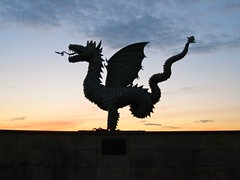
Kazan é a cidade mais bonita da Rússia (que eu conheço até o momento). São Petersburgo é mais impressionante, Krasnoyarsk tem mais natureza, mas Kazan é linda. A maioria das ruas e prédios do centro estão super bem conservados. Alguns bairros e ruas parecem cenário de filme. É difícil acreditar que você está na Rússia. Fora isso, o Kremlin de Kazan é um lugar único. Além das paredes brancas, a fortaleza ainda abriga mesquitas e igrejas, lado a lado, numa combinação exótica que inspira uma tolerância (religiosa e étnica) não muito comum em algumas partes do país. Existe um outro ponto turístico, que eu não tive tempo de visitar, chamado Tempo De Todas As Religiões que, além de mesquitas e igrejas, tem ainda sinagogas. Dizem que é lindo e, como eu pretendo voltar, tenho certeza que eu vou ter fotos no próximo post sobre a capital do Tartastão.
Fui.
On my first trip to Kazan, I didn't manage to visit a single monument of this amazing city. I was so tired from riding that I didn't have the strength to walk up to a restaurant to eat. Those 2 days, riding in leather under a blazing sun, literally drained me. I only avoided dehydration because there was a water vending machine next to the pits.
My second trip was totally different: I managed to see the city and still took part in my first official motorbike race. I'll start with the race.
After learning a lot at a serious riding school and from a crazy pilot, it was time to see what actually applies to a real race. The challenge was to see how much theory I would have the guts to put into practice, considering that there would be 28 pilots around trying to overtake me (don't forget that the track is only 10 meters wide). The open category (in which I competed) is, as the name suggests, open to any pilot riding any motorbike. In other words, it's neither the fairest of categories, nor the most organized. Just so you have an idea of the mess, sorting out the starting line took us over 30 minutes.
After all that non-sense talk, it was time to ride. Despite my desire to ride, I almost didn't make it to the track because of technical details. I had to cover 100% of the glass surfaces (lights, tail lights, blinkers) with duct tape, lock the side stand in place, and remove the passenger's foot pegs, the rear-view mirrors and the number plate. As if that wasn't enough, I still needed to get my racing number. That was the real challenge. I had gone to the stand that makes the numbers 3 times already. It was always empty. After asking everyone in the track who was responsible for the stand, someone told me it was the same guy who was running the small pop-up shop. I went to the shop and asked him to come with me make the number. He told me it was not his job to make numbers, so I went back to the race supervisors and told them what was happening. They told me to go back to the stand and cut the sticker myself, which sounded very practical to me. And so I did.When I was about to leave the place with my nicely homemade number, the guy came back. He barely saw what was going on before he started shouting "What the hell are you doing here?!? Who said you could do this?!?" When I told him it was the supervisors, he started fuming and went insane. He started yelling, saying that the guy could f**k himself or something of the sorts. I couldn't hear it well because I got the hell outta there and had very little time to get on my bike. Two minutes later, I noticed that I had left my socks in the hotel, which meant having to buy something at the crazy guy's shop. As I headed towards the shop, I prepared myself for the worst. He kept staring at me as I walked there, ready to argue with me again. But, when I popped the question "So, do you sell racing socks here?", he became an angel. "But of course. We have this one, that one, blah blah blah." Nothing like money to transform people. But I had no time for chit chat. I needed to enter the track before the first training heat was over. I put on my recently purchased socks and left. All good with the bike, all good with me. So, there we went.
The first few laps on an open category are not easy. There is too much people around: too much crazy people, unexperienced and/or with a desire to win that doesn't match their amateur status. Hitting the brakes hard or diving into a turn require blind faith. It's better not to think much. Luckily, eventually you end up behind someone who really rides well and start to relax. Riding behind someone faster than you is great: you improve your line, find out the real limits of the track and, therefore, improve your lap times. Which is crucial in the open category.
In the open category, people start in small groups to avoid accidents. Time starts to count from the second lap onwards. The goal is to complete 10 laps as fast as possible. In theory, this is a great system. But for rookies (such as myself), it can be a little confusing. Let me explain. I started in the 21st position (of 29). I started well, overtook some people who were in front of me and started following the leaders in the last laps. When the results came out, I was shocked. I was 28th of 29, better only than the guy who didn't finish the race. I couldn't understand what had happened, so I went talk to the supervisors. After hearing my complaint, he explained the obvious: "You crossed the finish line with the leaders (who were one lap ahead of you) and assumed that the flag was for you as well. You slowed down, thinking your 10th lap was over." Duh… Luckily, so many people made the same mistake that they decided not to count the last lap and I finished 16th.
That was my saturday. On Sunday, after resting a lot, I finally got to see the city.
Kazan is the most beautiful city in Russia (that I have been to yet). St. Petersburg is more impressive, Krasnoyarsk has more nature around, but Kazan is gorgeous. Most of the historical buildings in the center are incredibly well taken care of. Some neighborhoods and streets look like movie sets. It's hard to believe you're in Russia sometimes. Besides that, the Kremlin of Kazan is something else. Besides its unique white walls, the fortress is home to mosques and churches, side by side, in an exotic combination that inspires a sort of tolerance (both ethnic and religious) that is not very common in other parts of the country. There's even a place (that I didn't have time to visit), called Temple Of All Religions, that holds a church, a mosque and a synagogue. I heard it's beautiful and, since I plan to return, I'm sure I'll be able to post some pictures on my next post about the capital of Tartarstan.
See ya.
Na segunda visita, muita coisa nova: consegui ver a cidade e ainda participei da minha primeira corrida oficial de motovelocidade.
Vou começar pela corrida.
Depois de ter tido aulas numa escola séria e com um piloto maluco, estava na hora de ver o que realmente se aplica a uma corrida. Óbvio que tudo o que eu aprendi com ambos me ajuda a ir mais rápido. O desafio era saber o quanto da teoria eu teria coragem de colocar em prática com 29 pilotos ao meu redor tentando me ultrapassar (lembre-se: a pista tem apenas 10 metros de largura). A categoria OPEN, na qual eu competi, é (como diz o nome) aberta a qualquer piloto em qualquer moto. Em outras palavras, não é a categoria mais justa nem muito menos a mais organizada. Só para você ter idéia da bagunça, levamos mais de 30 minutos só para concordar no sistema de largada.
Passado o blá blá blá, chegou a hora de ir para a pista. Apesar da vontade de correr, quase não fui para a pista por causa da vistoria técnica. Precisei cobrir 100% dos faróis e lanternas com fita adesiva, travar o pezinho, e remover retrovisores, apoios de pé traseiros e a placa. Como se isso não fosse suficiente, ainda precisava colocar o número da moto. Isso foi uma novela à parte. Eu já tinha ido no stand que fazia os números 3 vezes e não tinha ninguém lá. Depois de perguntar para Deus e o mundo quem era o responsável pelo stand, fiquei sabendo que era o mesmo cara que controlava a lojinha de acessórios. Chegando lá, pedi para ele ir até o stand comigo e fazer o número. Ele disse que não era responsabilidade dele. Voltei na vistoria e disse o que estava acontecendo. Eles me disseram para cortar um pedaço de adesivo e fazer o número eu mesmo. Me pareceu razoável e lá fui eu. Achei uma tesoura, cortei o adesivo, fiz o número e, quando estava quase saindo de lá, aparece o cara da lojinha. Ela mal chegou e já começou a gritar. “O que você está fazendo aqui?!? Quem te deu autorização para fazer isso?!?” Quando eu disse que tinha sido o cara da vistoria, ele quase enlouqueceu. Mandou o cara tomar no… Salivando de raiva. Saí andando e fui para a minha moto. Dois minutos depois, percebi que eu tinha esquecido a meia no hotel e tive que ir na lojinha do cara. Fui para lá preparado para o pior. Ele me olhando de longe, pronto para discutir. Quando eu perguntei "Você tem meia para pilotos?", virou um anjo. "Claro. Tem essa, essa, essa…" Nada como o dinheiro para transformar as pessoas. Mas eu não tinha tempo para gentilezas. Precisava ir para a pista antes que acabasse o treino de reconhecimento. Me vesti e parti. Passei pela vistoria e comecei o treino.
As primeiras voltas numa categoria open não são fáceis. Tem muita gente em volta: muita gente louca, sem experiência e/ou com um espírito de competição que não condiz com amadores. Enfiar a mão no freio ou fechar uma entrada de curva requer muita fé. É melhor não pensar muito. Felizmente, uma hora ou outra você acaba atrás de alguém que realmente sabe andar e começa a relaxar. As voltas atrás de alguém que pilota são ótimas para melhoras suas linhas, aprender os reais limites de velocidade da pista e baixar o seu tempo.
Na categoria open, a largada é feita por grupos para evitar confusão e o tempo começa a contar a partir da segunda volta. O objetivo é completar 10 voltas o mais rápido possível. Em teoria, esse sistema é ótimo. Para iniciantes (como eu), pode ser um pouco confuso. Deixa eu explicar. Eu larguei em na 21a posição (de 29). Larguei bem, ultrapassei alguns caras que estavam na minha frente e nas últimas voltas segui os líderes da prova, fazendo meus melhores tempos. Ao sair o resultado, vi que estava na 28a posição, uma à frente do único piloto que não completou a prova. Achei aquilo muito estranho e fui conferir os tempos. Notei que minha última volta tinha sido 2 minutos mais longa do que todas as outras. Confuso, fui perguntar para o coordenador da prova o que tinha acontecido. Ele me explicou o óbvio: "Você passou pela bandeirada (que era para os líderes da prova que estavam uma volta na minha frente) e desacelerou, achando que a sua 10a volta já tinha contado." Duh… A minha sorte é que tanta gente fez o mesmo que eles resolveram não contar a última volta e eu acabei em 16o.
Isto foi o meu sábado. No domingo, depois de descansar, eu finalmente fui conhecer a cidade.
Kazan é a cidade mais bonita da Rússia (que eu conheço até o momento). São Petersburgo é mais impressionante, Krasnoyarsk tem mais natureza, mas Kazan é linda. A maioria das ruas e prédios do centro estão super bem conservados. Alguns bairros e ruas parecem cenário de filme. É difícil acreditar que você está na Rússia. Fora isso, o Kremlin de Kazan é um lugar único. Além das paredes brancas, a fortaleza ainda abriga mesquitas e igrejas, lado a lado, numa combinação exótica que inspira uma tolerância (religiosa e étnica) não muito comum em algumas partes do país. Existe um outro ponto turístico, que eu não tive tempo de visitar, chamado Tempo De Todas As Religiões que, além de mesquitas e igrejas, tem ainda sinagogas. Dizem que é lindo e, como eu pretendo voltar, tenho certeza que eu vou ter fotos no próximo post sobre a capital do Tartastão.
Fui.
On my first trip to Kazan, I didn't manage to visit a single monument of this amazing city. I was so tired from riding that I didn't have the strength to walk up to a restaurant to eat. Those 2 days, riding in leather under a blazing sun, literally drained me. I only avoided dehydration because there was a water vending machine next to the pits.
My second trip was totally different: I managed to see the city and still took part in my first official motorbike race. I'll start with the race.
After learning a lot at a serious riding school and from a crazy pilot, it was time to see what actually applies to a real race. The challenge was to see how much theory I would have the guts to put into practice, considering that there would be 28 pilots around trying to overtake me (don't forget that the track is only 10 meters wide). The open category (in which I competed) is, as the name suggests, open to any pilot riding any motorbike. In other words, it's neither the fairest of categories, nor the most organized. Just so you have an idea of the mess, sorting out the starting line took us over 30 minutes.
After all that non-sense talk, it was time to ride. Despite my desire to ride, I almost didn't make it to the track because of technical details. I had to cover 100% of the glass surfaces (lights, tail lights, blinkers) with duct tape, lock the side stand in place, and remove the passenger's foot pegs, the rear-view mirrors and the number plate. As if that wasn't enough, I still needed to get my racing number. That was the real challenge. I had gone to the stand that makes the numbers 3 times already. It was always empty. After asking everyone in the track who was responsible for the stand, someone told me it was the same guy who was running the small pop-up shop. I went to the shop and asked him to come with me make the number. He told me it was not his job to make numbers, so I went back to the race supervisors and told them what was happening. They told me to go back to the stand and cut the sticker myself, which sounded very practical to me. And so I did.When I was about to leave the place with my nicely homemade number, the guy came back. He barely saw what was going on before he started shouting "What the hell are you doing here?!? Who said you could do this?!?" When I told him it was the supervisors, he started fuming and went insane. He started yelling, saying that the guy could f**k himself or something of the sorts. I couldn't hear it well because I got the hell outta there and had very little time to get on my bike. Two minutes later, I noticed that I had left my socks in the hotel, which meant having to buy something at the crazy guy's shop. As I headed towards the shop, I prepared myself for the worst. He kept staring at me as I walked there, ready to argue with me again. But, when I popped the question "So, do you sell racing socks here?", he became an angel. "But of course. We have this one, that one, blah blah blah." Nothing like money to transform people. But I had no time for chit chat. I needed to enter the track before the first training heat was over. I put on my recently purchased socks and left. All good with the bike, all good with me. So, there we went.
The first few laps on an open category are not easy. There is too much people around: too much crazy people, unexperienced and/or with a desire to win that doesn't match their amateur status. Hitting the brakes hard or diving into a turn require blind faith. It's better not to think much. Luckily, eventually you end up behind someone who really rides well and start to relax. Riding behind someone faster than you is great: you improve your line, find out the real limits of the track and, therefore, improve your lap times. Which is crucial in the open category.
In the open category, people start in small groups to avoid accidents. Time starts to count from the second lap onwards. The goal is to complete 10 laps as fast as possible. In theory, this is a great system. But for rookies (such as myself), it can be a little confusing. Let me explain. I started in the 21st position (of 29). I started well, overtook some people who were in front of me and started following the leaders in the last laps. When the results came out, I was shocked. I was 28th of 29, better only than the guy who didn't finish the race. I couldn't understand what had happened, so I went talk to the supervisors. After hearing my complaint, he explained the obvious: "You crossed the finish line with the leaders (who were one lap ahead of you) and assumed that the flag was for you as well. You slowed down, thinking your 10th lap was over." Duh… Luckily, so many people made the same mistake that they decided not to count the last lap and I finished 16th.
That was my saturday. On Sunday, after resting a lot, I finally got to see the city.
Kazan is the most beautiful city in Russia (that I have been to yet). St. Petersburg is more impressive, Krasnoyarsk has more nature around, but Kazan is gorgeous. Most of the historical buildings in the center are incredibly well taken care of. Some neighborhoods and streets look like movie sets. It's hard to believe you're in Russia sometimes. Besides that, the Kremlin of Kazan is something else. Besides its unique white walls, the fortress is home to mosques and churches, side by side, in an exotic combination that inspires a sort of tolerance (both ethnic and religious) that is not very common in other parts of the country. There's even a place (that I didn't have time to visit), called Temple Of All Religions, that holds a church, a mosque and a synagogue. I heard it's beautiful and, since I plan to return, I'm sure I'll be able to post some pictures on my next post about the capital of Tartarstan.
See ya.
Monday, October 15, 2012
Bem-vindo ao Golfo de Gökova.
Welcome to the Gulf of Gökova.
Quando você diz que vai para a Turquia, todo mundo aqui na Rússia torce o nariz. A Túrquia (mais precisamente a cidade de Antalya) é o destino mais comum para os turistas Russos por ser perto, não haver necessidade de visto e porque os hotéis escolhidos quase sempre tem bebida de graça. O resultado é um monte de gente bêbada largada em volta de uma piscina, num resort onde todo mundo fala russo. Na minha opinião, é o mesmo que não viajar. Principalmente se tratando de um país com tanta coisa interessante, como a Turquia.
Eu amo a Turquia. Se eu tenho a chance de ir para lá e conhecer algo novo, não penso duas vezes. Em julho, foi a vez de navegar pelo Golfo de Gökova. Um paraíso que não deixa nada a dever para a sua vizinha Grécia.
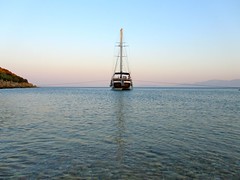
Além da paisagem, o esquema em que eu viajei foi simplesmente ideal. Alugamos um gulet (barco tradicional turco) e partimos de Bodrum para 6 dias de descanso absoluto. Nosso barco, o Fatos (clique aqui para mais informações), era super bem acabado e muito mais confortável do que alguns dos barcos que nós vimos por ali. Uma vez a bordo, você não precisa mais pensar em nada. O comandante explica para onde vamos, a equipe cuida do barco e o chefe prepara refeições deliciosas 3 vezes por dia. Tudo isso por apenas US$600 por pessoa (pela semana toda!).
Não vou perder tempo aqui tentando descrever cada praia, cada parada ou a cor do mar. Sugiro que você veja as fotos. Elas falam por si só. A única coisa que vale descrever é o céu à noite. Deitado no barco, sem luz alguma, parece que o céu toma vida. Você se sente abraçado pela escuridão e parece que as estrelas só estão lá para te entreter. Fazia tempo que eu não ficava tão impressionado com o céu.
Bem, nada melhor do que uma viagem dessas depois de uma escalada em extrema altitude e um esforço descomunal pilotando moto sob o sol matador de Kazan.
Mais uma vez, obrigado Turquia.
When you tell someone you are going to Turkey, people in Russia are not very impressed. Turkey (more specifically the city of Antalya) is the most common destination for Russian tourists due to the fact that it’s close, doesn’t require any visa, and has free booze in the hotels they go to. The result is a bunch of drunk people by the pool of a resort where everyone speaks Russian. In my opinion, that’s the same as not traveling. Especially when we are talking about a country like Turkey, with so many things to be seen.
I for one love Turkey. So whenever I have a chance to go there and see something new, I don’t think twice. In july, I had such chance and went to the Gulf of Gövoka. That paradisiac place is just as amazing as its neighboring competitor Greece.
Besides the sights and surroundings, the way I enjoyed the place was simply ideal. We rented a gulet (traditional turkish sailing boat) and set off from Bodrum to enjoy 6 days of pure relaxation. Our boat, Fatos (click here for more information), was superbly finished and way more comfortable than the boats we saw around us. Once onboard you don’t have to worry about a thing. The captain tells you where to go, the crew takes care of the boat, and the chef prepares delicious meals 3 times a day. All that for around US$600 per person (for the whole week!).
I won’t spend time trying to describe each beach, each stop or the color of the sea. I suggest you look at the pictures. They are pretty self-explanatory. The one thing I will describe though is the night sky. Lying on the deck with absolutely no light makes the sky come to life. You feel like darkness embraces you and that the stars’ sole purpose is to entertain you. I haven’t been this impressed by the sky in a long while.
Well, nothing like a relaxing trip like this after climbing in high altitude and riding a motorbike under the blazing sun of Kazan.
Once again, thanks, Turkey.

Eu amo a Turquia. Se eu tenho a chance de ir para lá e conhecer algo novo, não penso duas vezes. Em julho, foi a vez de navegar pelo Golfo de Gökova. Um paraíso que não deixa nada a dever para a sua vizinha Grécia.
Além da paisagem, o esquema em que eu viajei foi simplesmente ideal. Alugamos um gulet (barco tradicional turco) e partimos de Bodrum para 6 dias de descanso absoluto. Nosso barco, o Fatos (clique aqui para mais informações), era super bem acabado e muito mais confortável do que alguns dos barcos que nós vimos por ali. Uma vez a bordo, você não precisa mais pensar em nada. O comandante explica para onde vamos, a equipe cuida do barco e o chefe prepara refeições deliciosas 3 vezes por dia. Tudo isso por apenas US$600 por pessoa (pela semana toda!).
Não vou perder tempo aqui tentando descrever cada praia, cada parada ou a cor do mar. Sugiro que você veja as fotos. Elas falam por si só. A única coisa que vale descrever é o céu à noite. Deitado no barco, sem luz alguma, parece que o céu toma vida. Você se sente abraçado pela escuridão e parece que as estrelas só estão lá para te entreter. Fazia tempo que eu não ficava tão impressionado com o céu.
Bem, nada melhor do que uma viagem dessas depois de uma escalada em extrema altitude e um esforço descomunal pilotando moto sob o sol matador de Kazan.
Mais uma vez, obrigado Turquia.
When you tell someone you are going to Turkey, people in Russia are not very impressed. Turkey (more specifically the city of Antalya) is the most common destination for Russian tourists due to the fact that it’s close, doesn’t require any visa, and has free booze in the hotels they go to. The result is a bunch of drunk people by the pool of a resort where everyone speaks Russian. In my opinion, that’s the same as not traveling. Especially when we are talking about a country like Turkey, with so many things to be seen.
I for one love Turkey. So whenever I have a chance to go there and see something new, I don’t think twice. In july, I had such chance and went to the Gulf of Gövoka. That paradisiac place is just as amazing as its neighboring competitor Greece.
Besides the sights and surroundings, the way I enjoyed the place was simply ideal. We rented a gulet (traditional turkish sailing boat) and set off from Bodrum to enjoy 6 days of pure relaxation. Our boat, Fatos (click here for more information), was superbly finished and way more comfortable than the boats we saw around us. Once onboard you don’t have to worry about a thing. The captain tells you where to go, the crew takes care of the boat, and the chef prepares delicious meals 3 times a day. All that for around US$600 per person (for the whole week!).
I won’t spend time trying to describe each beach, each stop or the color of the sea. I suggest you look at the pictures. They are pretty self-explanatory. The one thing I will describe though is the night sky. Lying on the deck with absolutely no light makes the sky come to life. You feel like darkness embraces you and that the stars’ sole purpose is to entertain you. I haven’t been this impressed by the sky in a long while.
Well, nothing like a relaxing trip like this after climbing in high altitude and riding a motorbike under the blazing sun of Kazan.
Once again, thanks, Turkey.
Subscribe to:
Posts (Atom)